Skip to content
Classes 1 to 5

Primary tuition for Classes 1 to 5

Primary tuition covers the years a child learns to read a line and hold a number in the head, and thousands of young learners spend those years with Edutara, at home or online. One tutor sits with one child, finds where it slipped, and goes back to that point.

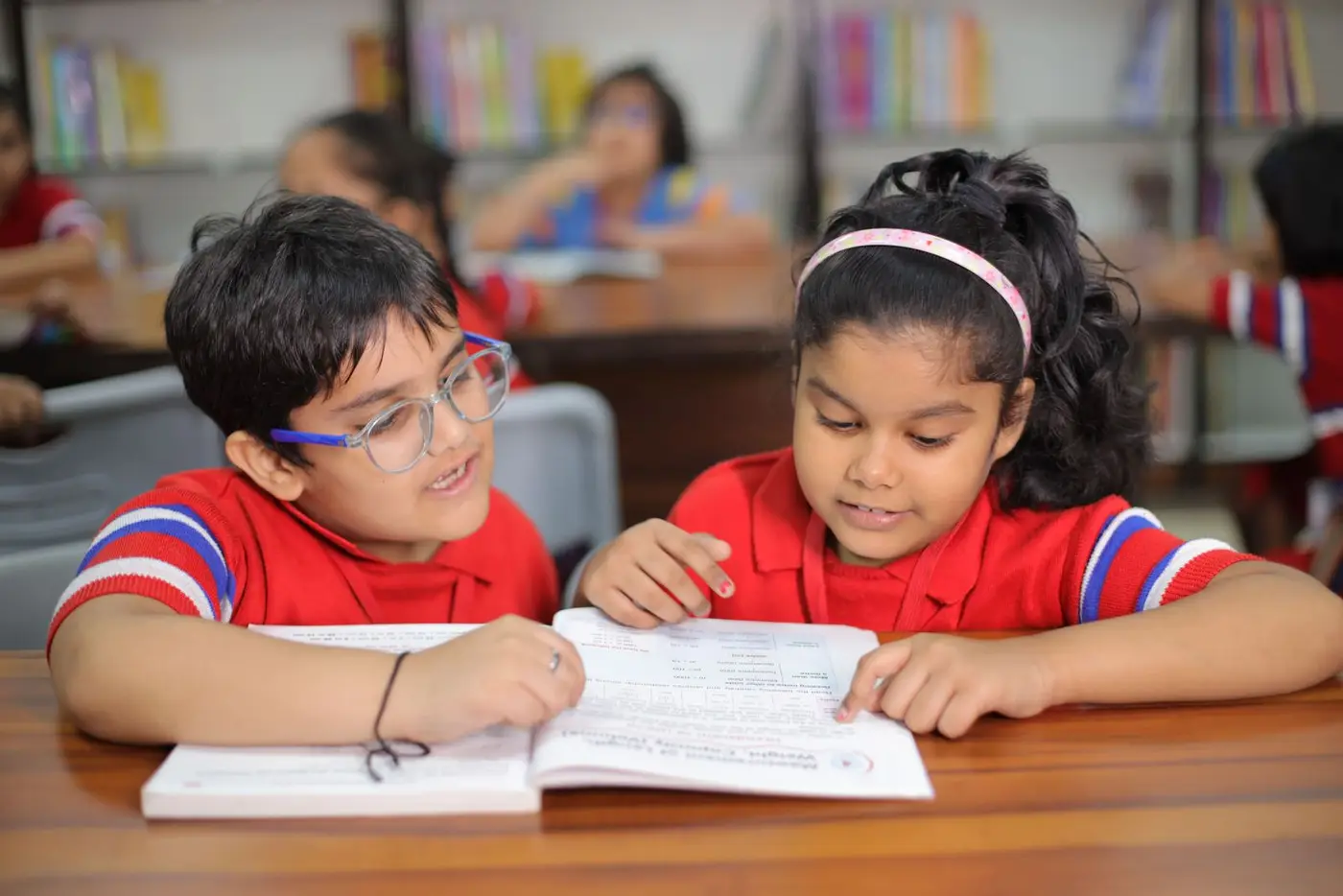
Two young children reading a book together at a classroom table

4.7 out of 5105 reviews

Program Guide

What is

primary tuition

Primary tuition is one-to-one teaching for a child in Classes 1 to 5. Under the National Education Policy 2020 these years fall into two stages: the Foundational Stage, which ends with Class 2, and the Preparatory Stage, which covers Classes 3 to 5 and ages 8 to 11. No board sets a paper here, so nothing forces the problem into the open. What is being built is the machinery a child will use for the next eight years: reading a sentence and knowing what it said, writing a line another person can read, and handling hundreds and thousands without counting on fingers. The work of a primary tutor is to find the exact place where that machinery slipped, and to go back and lay it again.

Key Points

  • Classes 1 and 2 are the Foundational Stage; Classes 3 to 5 are the Preparatory Stage, ages 8 to 11, under the National Education Policy 2020.

  • The Ministry of Education's NIPUN Bharat mark for the end of Class 3 is 60 words a minute of unseen text, read with understanding.

  • Schools have moved to the new NCERT books: Mridang and Sarangi in Class 1, then Santoor, Veena, Maths Mela and Our Wondrous World from Class 3 onward.

  • A Class 5 child in a central government school now sits an annual examination under the RTE Amendment Rules of 2024.

  • Lessons run at the child's home or online, one tutor to one child, and a new tutor is free whenever one is needed.

Format Options

Two ways a primary lesson can run

A small child learns better in a room where the tutor, the notebook and the sharpener are all within arm's reach. Where that is hard to arrange, the same lesson runs on a screen with a parent somewhere nearby.

  1. Duration: Usually 45 to 60 minutes, agreed with the tutor

    Tuition at your home

    The tutor comes to the house and works at the table the child already uses, with the school notebook and textbook open. Handwriting, pencil grip and the way a child gives up halfway through a sum are all visible from that chair.

    • Teaching runs from your child's own school notebook
    • Handwriting and copy work corrected as they happen
    • A parent can watch a lesson without sitting in it
    • Suits Classes 1 to 3, where attention is short
  2. Duration: Usually 40 to 50 minutes, agreed with the tutor

    Online lessons

    A video lesson with a shared screen and a worksheet the child can print or copy out. This suits a child who lives far from where the right tutor is, and it works from about Class 3 upward, when a child can hold a screen for forty minutes.

    • Worksheets the child can redo the next day
    • No travel time taken out of either evening
    • Useful when a child changes city mid-session
Learning Roadmap

What each primary class is really asking for

Five classes, and the thing a child has to get right in each of them. A tutor who knows this list can tell within two lessons which year the trouble actually started in.

  1. Classes 1 and 2

    Foundational Stage

    A child is discovering that letters carry sounds and sounds make words. NCERT's Mridang, Sarangi and Joyful Mathematics carry these two years. Tuition at this age is reading aloud, tracing, and counting things that can be picked up and moved.

    Subjects

    EnglishHindi or home languageMathematics

    Focus Areas

    • Letter sounds, matras and blending
    • Numbers to 99, and addition you can see
    • Pencil grip and letter shapes on four lines
  2. Class 3

    The year that is measured

    The Ministry of Education's NIPUN Bharat target lands here: reading at least 60 words a minute from an unseen age-appropriate text, with comprehension and clarity. Maths Mela moves the child from Toy Joy and Double Century into the House of Hundreds chapters, where place value starts to carry weight.

    Subjects

    EnglishHindiMathematicsThe World Around Us

    Focus Areas

    • Reading an unseen page and retelling it
    • Place value to 999, regrouping in both directions
    • Four or five sentences written without a model
  3. Class 4

    Preparatory Stage

    Chapters get longer and the child is expected to read them alone. Tables stop being a song and become a tool for division and two-step word problems. Santoor, Veena, Maths Mela and Our Wondrous World continue from Class 3, and writing speed begins to matter as much as writing neatly.

    Subjects

    EnglishHindiMathematicsThe World Around Us

    Focus Areas

    • Tables used out of order, inside division
    • Reading a chapter without an adult beside them
    • Answering in complete sentences
  4. Class 5

    The last primary year

    Maths Mela for Grade 5 opens with fractions and angles as turns, and closes with maps, locations and data through pictures. In central government schools this is also a year with an annual examination, and a re-examination within two months where the promotion criteria are not met.

    Subjects

    EnglishHindiMathematicsThe World Around Us

    Focus Areas

    • Fractions, decimals and measurement
    • Planning a paragraph before writing it
    • Finishing a whole paper inside the time given
Content Map

What a primary tutor actually covers

Seven areas, and a tutor rarely works on all of them at once. The first fortnight usually goes into finding which two are holding the rest back.

Built around the NCERT books schools are using in the 2026-27 session, and adjusted to whichever set your child's school has prescribed.

Module 01

Reading in English

Decoding and understanding are two separate skills, and a child can have one without the other. Santoor for Class 3 opens each unit with a picture-reading page for exactly this reason, and a tutor uses that page long before the printed story.

  • Letter sounds, digraphs and blending
  • Reading aloud without tracking with a finger
  • Picture reading before the text
  • Retelling a passage in the child's own words
  • Sight words that keep tripping the child up
  • Speed and comprehension raised together

Module 02

Hindi or the home language

The National Education Policy 2020 asks that the medium of instruction be the home language wherever possible until at least Class 5. In practice many children read English better than the language they speak at home, and the Hindi paper is where that shows first.

  • Matras and the sounds they change
  • Reading a page of Sarangi or Veena aloud
  • Writing from dictation
  • Gender, number and simple grammar
  • Answering in full sentences

Module 03

Number sense and place value

Almost every arithmetic problem in the primary years traces back to place value never becoming physical. The House of Hundreds chapters in Maths Mela for Class 3 exist to make it physical, and a tutor will often take a Class 5 child back to them.

  • Numbers to 99, then to 999 and beyond
  • Ones, tens and hundreds as bundles
  • Addition and subtraction with regrouping
  • Estimating an answer before working it out
  • Reading and writing numbers in words

Module 04

Tables, multiplication and division

A table recited from the start every time is a song, and a song is no use inside a division sum. Building tables from skip counting and then asking for them out of order is slower in week one and faster by week four.

  • Tables 2 to 12 built from skip counting
  • Multiplication as repeated addition
  • Division as fair sharing, then as the opposite of multiplying
  • Two-step word problems
  • Checking an answer by working backwards

Module 05

Measurement, shapes and data

This is the part of the syllabus that looks easy and quietly costs marks later, because it is taught quickly and practised once. Filling and Lifting in Class 3 and Weight and Capacity in Class 5 are the same idea, four years apart.

  • Length, weight and capacity with real containers
  • Telling time on a dial and on a screen
  • Money, change and simple bills
  • Fractions and symmetrical designs from Class 5
  • Reading a picture graph and drawing one

Module 06

The World Around Us

Environmental studies is now taught as The World Around Us, and Our Wondrous World for Grade 5 is organised into units such as Life Around Us, Incredible India and Our Amazing Planet. Its questions ask a child to observe and explain, which is a writing skill as much as a science one.

  • Water, food and the body
  • Journey of a River and Rhythms of Nature
  • Our Vibrant Country and Some Unique Places
  • Keeping an observation journal through the year
  • Writing an answer to a 'let us reflect' question

Module 07

Handwriting and copy work

A child who writes slowly falls behind in every subject at once, because the class moves on while the notebook is still on the second line. This is the one area parents notice and schools rarely have time for.

  • Pencil grip, paper angle and sitting posture
  • Letter formation on a four-line book
  • Copying from the board without dropping words
  • Speed raised without losing the shape
  • Keeping a notebook that can be revised from
Who It Is For

Who asks for a primary tutor

Four requests out of five arrive with the same sentence: something is off, and the school has said everything is fine. Here is what that usually turns out to be.

A Class 1 or Class 2 child finding their feet

School has started and the letters are still coming out backwards, or the child cries at homework. At this age a tutor spends more time on sounds, counting and pencil grip than on anything the timetable calls a subject.

Recommended:

Reading aloudNumbers to 99Handwriting

A Class 3 child who reads slowly

The child reads, and the reading is correct, and nothing stays. This is the commonest reason a primary tutor is called, and it is also the one with the clearest national benchmark to work towards.

Recommended:

Reading fluencyComprehensionPlace value

A Class 5 child facing the examination

The annual examination at the end of Class 5 has become real again in central government schools, and a child does better knowing what a paper feels like before sitting the first one. Answer writing and time management matter as much as the syllabus.

Recommended:

FractionsFull paper practiceAnswer writing

A child who has changed school, board or medium

A transfer mid-session, a move from a state board school to a CBSE one, or a switch from the home language to English as the medium. The gap is rarely the child's ability; it is a set of chapters nobody taught twice.

Recommended:

Catch-up planChange of mediumMissed chapters
Readiness Assessment

Where is your child right now?

Six questions a parent can answer in a minute, about the things that are usually the first to slip in the primary years.

None of this is a test of the child, and nothing here is scored by anyone at a school. It is a way of turning a vague worry into something specific enough to hand to a tutor: reading, tables, writing, or simply whether the child says anything when stuck.

Progress0/6 Question
Question 1 of 6understanding
Your child reads a page of the school book aloud. What happens next?

Select the appropriate answer

A Peek at the Material

A page from a Class 3 lesson

Written for this page, with nothing lifted from a textbook. It is the sort of thing a tutor puts in front of a child about fifteen minutes into an hour.

Class 3: reading and number work in one sitting

Chips the tutor lays on the table

shchthwh
shopchipthinwhale
100101
3 hundreds4 tens5 ones

Parts making a whole

  1. whalewhale
  2. 3 hundreds4 tens5 ones345
  3. 7taken six times42
  4. 52take away 2725

Read it, then answer it

Meera had 345 marbles. She gave 27 of them to her brother and kept the rest in a tin.

Question: How many marbles are in the tin?

Answer: 318. A child who regroups properly gets there. A child who takes the smaller digit from the larger each time will say 322, and that single wrong answer tells the tutor where to start.

The last line is the whole point. A child who only decodes will read the sentence beautifully and still answer it wrongly.

Five things a tutor looks for first

Where primary children actually get stuck

None of these show up as a bad report card straight away. They show up two or three years later, in a subject that looks unrelated.

Challenge

Reading every word correctly and remembering none of it

A common sticking point

Root cause

Decoding and comprehension are separate skills that develop at different speeds. Reading in class is usually done aloud, round the room, and the praise goes to the child who sounds fluent. A child can learn to perform a page very well without ever forming a picture of what is happening in it.

What helps

The tutor stops after two lines and asks who did what, then asks the child to say the next line before reading it. Santoor's picture-reading pages are used for this before the story is opened at all, because a child who can narrate a picture already has the habit that reading needs.

Challenge

A table recited as a song, useless inside a division sum

A common sticking point

Root cause

The table was learned in order and is only retrievable in order. Ask for seven sixes and the child starts at seven ones, which takes long enough that the rest of the sum is forgotten. Division makes this worse, because it needs the table backwards.

What helps

Tables get rebuilt from skip counting with objects, then drilled out of order, then used immediately inside division. The tutor asks how many sixes are in forty-two on the same day the six times table is practised, so the two never separate.

Challenge

Subtracting the smaller digit from the larger, whichever one is on top

A common sticking point

Root cause

Borrowing was taught as a rule about crossing out a digit and writing a small one above it. If place value never became physical, the rule has nothing to attach to, so the child quietly replaces it with one that always works: take the small number from the big one.

What helps

Back to bundles. Ten single sticks tied into one bundle, one bundle untied into ten, and the House of Hundreds chapters from Maths Mela worked through with real objects before any sum is written. Even a Class 5 child sometimes needs this fortnight.

Challenge

Handwriting slow enough to cost the child the lesson

A common sticking point

Root cause

The class moves on while the notebook is on the second line, so the child copies from a neighbour, and the copy has errors in it. By Class 4 the notebook itself is unusable for revision, which means every test is revised from memory.

What helps

Pencil grip and paper angle are corrected first, then letter formation on a four-line book for ten minutes of each lesson, then copying against a timer. Speed comes from the shapes becoming automatic, so the shapes are fixed before the timer appears.

Challenge

A child who never says that something was not understood

A common sticking point

Root cause

A primary child reads the adult's face before answering. Saying that a lesson made no sense costs something at seven years old, especially if the last time it was said the reply was impatient. So the answer becomes yes, and the gap grows a chapter a week.

What helps

The tutor asks the child to teach the step back, out loud, which makes hiding harder and is not felt as a test. Working one to one also removes the audience, and most of the silence in a classroom is about the audience.

Nationally, 23.4 per cent of Std III children in government schools could read a Std II level text in 2024, up from 16.3 per cent in 2022, according to ASER 2024. The same survey puts Std III children who can do a two-digit subtraction with borrowing at 33.7 per cent.

How we look for the right tutor

How a primary match is put together

How a tutor is found for a small child, step by step, the way every Edutara match for Classes 1 to 5 runs.

  1. One child, one tutor

    A primary lesson is mostly listening to one child read, watching one hand write, and noticing the moment attention goes. None of that survives in a group, which is why there is no group option here.

  2. Matched on class, board and subject

    You say Class 3, CBSE, maths and Hindi, at home in the evening. Edutara then looks for someone who teaches exactly that combination, in the language your child is being taught in.

  3. The child has to take to the tutor

    Small children take to a person or they do not, and a parent usually knows inside one hour. A child who needs a different tutor, in the first week or halfway through the school year, gets one free of charge.

  4. Edutara sets the fee

    Parents pay Edutara for a young child's lessons on one monthly invoice. Edutara sets the fee from the class, the subject and the city, and pays the tutor for every lesson.

  5. Tutors are never charged

    No joining fee and no payment for a lead, and Edutara pays the tutor for every lesson. This holds permanently, and it is the reason a good graduate in a small town can afford to take up tutoring at all.

What a primary tutor has to be able to do

Teaching a six-year-old and teaching an eleven-year-old are two different jobs, and a primary tutor is asked to do both in the same week.

What we look for in a tutor
  • Can teach a Class 1 child and a Class 5 child in the same week without using the same lesson twice
  • Fluent in the medium the school teaches in: English, Hindi or the child's home language
  • Knows the current NCERT primary books, or the state textbook set the school has prescribed
  • Patient with pencil grip, four-line books and the fifteenth attempt at one sum
  • Outside the school system: Section 28 of the Right of Children to Free and Compulsory Education Act, 2009 keeps serving school teachers out of private tuition
  • Willing to tell a parent plainly, in the first fortnight, what the gap actually is

How a primary lesson is built

Find the floor before anything else

The first two or three lessons are diagnosis. An unseen page read aloud, a sum from two classes below, a line written from dictation. The tutor is looking for the lowest level at which the child is completely secure, and teaching starts from there.

Go backwards before going forwards

Where a Class 5 child cannot do fractions because place value never held, the fortnight spent on place value is the shorter route. Covering the current chapter on top of a gap produces a child who can copy the method and not the reasoning.

Short stretches, things in the hand

Attention in Classes 1 to 3 comes in bursts of about ten minutes. A lesson is built as three or four of those, with counters, bundles, a four-line book and a picture page, and with the hardest thing placed second, while the attention is still fresh.

Say what changed, every fortnight

A parent should be told what was worked on and what moved, in plain language and without a chart. If a tutor cannot say what changed in two weeks of primary teaching, the lessons were revision and not teaching.

Feature comparison

A home tutor, a tuition class, or working through it yourself

All three are reasonable for a primary child, and all three are in wide use. The difference is who notices the specific thing your child is doing wrong.

Edutara
Neighbourhood tuition class
Working through it at home

Someone finds the exact chapter your child missed

One child has the whole hour

Teaching follows your school's own textbook set

Taught by someone who knows how primary reading is built

Exclusive

A new tutor free whenever the child needs one

Works when the only free hour comes after eight

At home or online

Where primary lessons happen

  1. Online tuition

    Anywhere in India with a steady connection

    Online suits a primary child from about Class 3, and needs a parent within earshot for the first few lessons. A fixed hour helps more at this age than at any other, because the routine is doing half the work.

    One fixed hour each week, kept
    A parent can sit within earshot
    Worksheets the child writes out by hand

    Timezone: IST (UTC+5:30)

  2. Home tuition

    City by city, as tutors are found

    Home tuition is being set up city by city. Put your locality on the form and Edutara looks for a tutor who can reach your house at the hour you need, in the medium your child is taught in.

    Available cities:

FAQ

Questions parents ask about the primary years

The ones that come up most often, answered with what the Ministry of Education, NCERT and the surveys actually say.

My child is in Class 3 and still reads slowly. Should I be worried?
The benchmark to measure against is public. Under NIPUN Bharat, the Ministry of Education expects a child at the end of Class 3 to read at least 60 words a minute from an unseen, age-appropriate text, with comprehension and clarity. Slower than that is common and it is worth acting on early. Nationally, 23.4 per cent of Std III children in government schools could read a Std II level text in 2024, according to ASER 2024, which is the highest that figure has been since the survey began. A tutor starts by timing a page and checking whether the child can say what happened in it, because slow reading and empty reading need different work.
Does my Class 5 child have to pass an examination now?
It depends on who runs the school. Through notification G.S.R. 777(E) of 21 December 2024, the Central Government notified the Right of Children to Free and Compulsory Education (Amendment) Rules, 2024, which apply to Classes 5 and 8 in schools established, owned or controlled by the Central Government or by a Union Territory without a legislature. A child who does not meet the promotion criteria at the annual examination gets additional instruction and a re-examination within two months of the results, and stays in the same class if the criteria are still not met. As reported to the Ministry, 18 States and Union Territories have notified the 2019 amendment, and sixteen others continue with no detention from Class 1 to Class 8. No child may be expelled before elementary education is complete.
Can the tutor teach in Hindi if the school teaches in English?
Yes, and for a primary child it is often the faster route. The National Education Policy 2020 says that wherever possible the medium of instruction until at least Class 5 should be the home language, mother tongue, local language or regional language, and it encourages a bilingual approach where the two differ. In practice a tutor explains the idea in the language the child thinks in, then rehearses the same answer in the language the school will ask for it in. Say on the form which language is spoken at home and which one the school uses.
My child's report card has no marks any more. How do I know where she stands?
Many schools have moved to the Holistic Progress Card published by PARAKH, the assessment centre at NCERT, which has separate cards for the Foundational Stage and for the Preparatory Stage of Classes 3 to 5. It records progress across domains through the year and takes in the teacher's observation, the child's own reflection, and what a parent and classmates notice, so it reads as a description of the child. It is more honest than a percentage and harder to act on alone. The practical answer is to test three things yourself: a page read aloud, a two-digit subtraction with borrowing, and a table asked out of order.
Is Class 1 too early for tuition?
For most children, yes, and a tutor who says otherwise is selling something. Classes 1 and 2 are the Foundational Stage under the National Education Policy 2020, and a child of six learns letter sounds and counting from play, repetition and an adult who is not in a hurry. Where tuition does help at this age is a specific, visible thing: a child who cannot yet blend sounds into words, a child who has started school a year late, or a child in a medium the family does not speak at home. Two short lessons a week is usually the whole prescription.
The school has changed all the books. Which ones are they now?
NCERT has replaced the primary set class by class. Class 1 and Class 2 use Mridang for English, Sarangi for Hindi and Joyful Mathematics for maths. From Class 3 the books are Santoor for English, Veena for Hindi, Maths Mela for mathematics and Our Wondrous World, which teaches what used to be called environmental studies under the name The World Around Us. Class 3 got its set first and Classes 4 and 5 followed, and all of them carry a 2026-27 reprint line. A tutor should be working from the same edition your school has prescribed, so it is worth sending a photograph of the book list when you write in.
Tuition ki fees kitni hogi, aur kisko deni hogi?
Edutara sets the fee for a young child's lessons from the class, the subject and the city you live in, and you hear the amount at enrolment, before anything starts. You pay Edutara on one monthly invoice, Edutara pays the tutor, and tutors are charged nothing at any stage. If the child and the tutor do not settle, at the start or later in the year, the next tutor is free.
Can my child's own class teacher take her for tuition at home?
No, and the bar is statutory. Section 28 of the Right of Children to Free and Compulsory Education Act, 2009 prohibits a teacher employed in a school from engaging in private tuition or private teaching activity. That applies to your child's own teacher and to any other serving school teacher. Edutara therefore looks among people outside the school system: a college student who is strong in the subject, a graduate or postgraduate, a retired primary teacher, or someone who teaches outside a school. Anyone in those groups can apply through the site, at no cost.
Complete Guide

A guide to the primary years

  1. What has actually changed in the primary classroom

    Three changes have landed on primary classrooms in quick succession, and most adults helping a young learner have met them one at a time without being told they are connected.

    The first is structural. The National Education Policy 2020 reorganised school into a 5+3+3+4 design, in which Classes 1 and 2 sit with three years of preschool in the Foundational Stage, and Classes 3 to 5 form the Preparatory Stage covering ages 8 to 11. The Preparatory Stage is meant to keep the play and activity of the foundational years while bringing in lighter textbooks and something closer to a formal classroom.

    The second is the books. NCERT has rewritten the primary set: Mridang, Sarangi and Joyful Mathematics for the first two classes, then Santoor, Veena, Maths Mela and Our Wondrous World from Class 3. They look different from the books a parent remembers. Chapters carry names like Toy Joy, Fair Share and Grandmother's Quilt, the mathematics arrives inside a story, and the questions ask a child to explain, with very few blanks left to fill.

    The third is assessment. Report cards in many schools have become Holistic Progress Cards, and at the end of Class 5 an annual examination has returned in central government schools. A parent is being asked to read a descriptive card in one hand and prepare a child for a paper in the other.

  2. How reading actually gets fixed

    Reading trouble in the primary years comes in two forms that look identical from across the room. In the first, the child cannot get the words off the page: sounds are unreliable, longer words are guessed from the first letter, and the finger never leaves the line. In the second, the words come off the page perfectly and nothing stays behind.

    They need opposite work. The first needs sounds rebuilt, including the pairs that carry one sound between them, and enough repetition that decoding stops taking up the whole of the child's attention. The second needs the reading slowed down and interrupted: stop after two lines, ask what just happened, ask what is likely to happen next, then carry on.

    A useful test at home takes ninety seconds. Open a page the child has never seen, of the sort used in the class below, and listen for a minute. Then close the book and ask three questions about it. Speed tells you about decoding, the three answers tell you about comprehension, and a child can fail either one on its own.

    Practical Tips

    1. Time one minute of unseen reading once a month and write the number in the back of a notebook.
    2. Ask what is going to happen next before turning the page, so prediction becomes a habit.
    3. Let the child read to a younger sibling or a grandparent; an audience that is not judging slows the panic.
    4. Keep one book going that has nothing to do with school, in whichever language the child reads most easily.
    5. Stop for the night before frustration arrives, even if the page is not finished.
  3. Tables, place value and the borrowing rule

    Most arithmetic that goes wrong in Classes 3 to 5 goes wrong in one of two places, and both of them were laid down earlier than the class where the marks are lost.

    Place value is the first. If a child has never physically bundled ten sticks into a ten and untied one back into ten singles, then hundreds, tens and ones are just column positions, and borrowing is a rule about crossing out. Rules without meaning get replaced by rules that always work, which is how a child arrives at taking the smaller digit from the larger every single time.

    Tables are the second. A table learned as a chant is only available from the beginning, which is too slow to use inside a division sum and useless when the question is how many sixes make forty-two. Skip counting, then questions out of order, then division on the same day is slower for a fortnight and permanent afterwards.

    Mistakes & Solutions

    Moving to the current chapter because the school has moved to it
    Spend the fortnight on the gap underneath. A child who does fractions on top of shaky place value learns to copy a method and cannot use it in a word problem.
    Buying a thicker practice book when sums keep coming out wrong
    Look at three wrong answers and find the pattern. Fifty more sums of the same kind will practise the same wrong method fifty more times.
    Testing tables only in order, from two upward
    Ask for nine sevens with no run-up, then ask how many sevens are in sixty-three. If the second question is harder, the table is a song.
    Correcting the notebook after the child has gone to bed
    Sit with the child while one sum is redone out loud. A correction the child did not hear explained is a tick in a notebook.
  4. Choosing between a tutor, a class and doing it yourself

    Private tuitionAgreed with the tutor
    The whole hour is spent on your child's actual gap
    Handwriting, grip and attention are visible to the tutor
    Teaching follows your school's own books and notebook
    Depends on one person being reliable week after week
    Needs a quiet corner of the house at a fixed hour
    Coaching centreSet by the centre
    Children work alongside others, which some enjoy
    A fixed timetable that runs whatever else happens
    One teacher, many children, and a pace set by the middle of the room
    A quiet child can sit through a term without being noticed
    The centre follows its own syllabus, set apart from your school's term plan
    Online tuitionAgreed with the tutor
    The right tutor can be in another city
    No travel time taken out of a school evening
    Easier to keep going after a move to a new city
    Hard below Class 3, when sitting still is the lesson
    Handwriting and grip are difficult to correct through a screen

    For a primary child the useful question is which of the three puts an adult close enough to notice that your child is copying a method without following it.

Getting started

Tell us what your child is stuck on

  • Classes 1 to 5
  • At home or online
  • English, Hindi or your home language
  • Tutor change free all year

Class, board, subject, and the thing you have noticed at home. Edutara looks for a tutor who teaches exactly that, and a different tutor is free whenever the fit is wrong.

Find a tutor

You keep a tutor only while it works, and a new one is free anytime.

Find a tutor