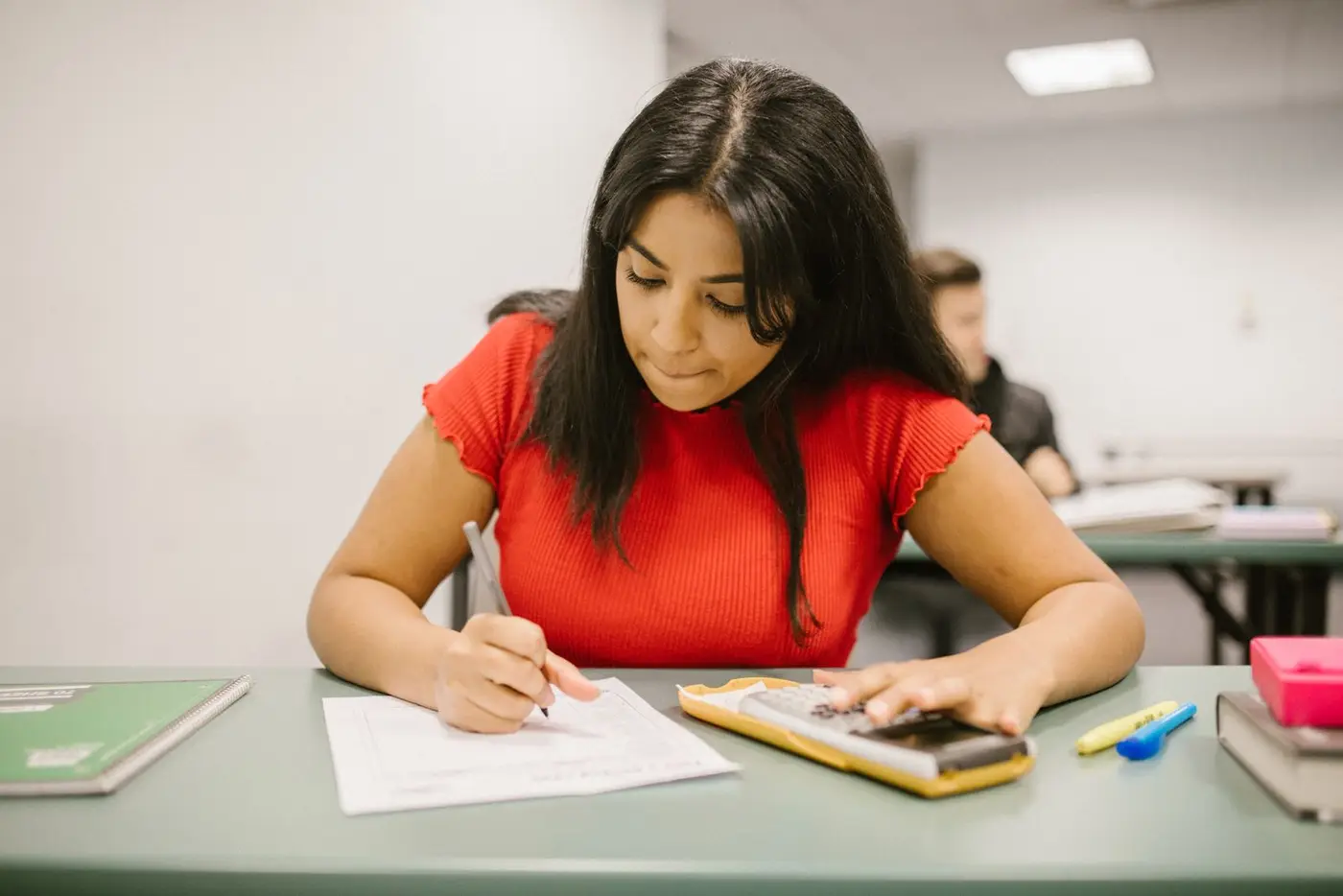
Accountancy tuition Class 12 and Class 11, one learner at a time
Accountancy tuition Class 12 lives in the working notes, and Edutara's hundreds of commerce tutors teach it at home or online. A tutor sits with one learner, watches the pen move, and fixes the step where the balance sheet stops balancing.
Accountancy is subject code 055 in the CBSE senior secondary scheme, and it runs across both years as one subject. Class 11 builds the process that turns a voucher into a balance sheet for a sole trader. Class 12 takes that same process into firms with several owners and into companies. In each year the CBSE paper is 80 marks in three hours, with 20 marks kept aside for project work. Almost every mark comes from a question the learner solves on paper, with the figures shown.
Key Points
1
CBSE gives Class 11 twelve marks for the theoretical framework, 44 for the accounting process and 24 for the financial statements of a sole proprietorship.
2
In Class 12, Part A holds 60 marks: partnership firms take 36 of them and company accounts 24.
3
Part B is a 20-mark choice: Financial Statement Analysis with the Cash Flow Statement, or Computerised Accounting.
4
Project work carries 20 marks in both years, split by CBSE into a 12-mark file and an 8-mark viva voce.
5
The ISC Accounts paper (858) also runs three hours for 80 marks, arranged in Sections A, B and C.
Format Options
Two ways an accountancy lesson can run
Ledger work needs a surface to write on and a person who can see what was written. Both of these formats keep that.
01
Duration: Usually 60 to 90 minutes, agreed with the tutor
Accountancy tuition at home
The tutor comes to your home with a register and a pen. Long questions on partnership and company accounts are worked side by side, so a wrong posting is caught in the third line, long before the end of the page.
Full-length questions solved on paper
Formats drilled until the headings come from memory
Help with the project file and the viva
02
Duration: Usually 60 minutes, agreed with the tutor
Online accountancy tuition
Lessons run over a call with a shared screen or a writing tablet. The learner photographs a solved question, the tutor marks it live, and every working note is read line by line.
A shared screen for ledgers and balance sheets
Solved sheets checked before the next lesson
Spreadsheet work for the computerised option
Program Levels
The two years, stage by stage
Class 11 is where the habits are built. Class 12 is where they are tested on firms, on companies and on a board paper.
01
Building the process
Class 11
Vouchers, journal, subsidiary books, ledger and trial balance, then the trading and profit and loss account and the balance sheet of a sole trader. GST calculation is taught here and stays here.
Subjects:
Theoretical frameworkAccounting processFinancial statements of sole proprietorship
Focus Areas:
Rules of debit and credit
Bank reconciliation statement
Depreciation, provisions and reserves
02
Partnership and companies
Class 12 Part A
Sixty of the eighty marks. Profit and loss appropriation, goodwill and its valuation, admission, retirement, death and dissolution, then share capital and debentures presented as Schedule III requires.
Subjects:
Accounting for partnership firmsAccounting for companies
Focus Areas:
Revaluation and realisation accounts
Goodwill treated as AS 26 allows
Forfeiture and re-issue of shares
03
The twenty-mark choice
Class 12 Part B
A school follows either Financial Statement Analysis, which carries 12 marks of ratios and comparative statements with 8 marks for the cash flow statement, or Computerised Accounting for the whole 20.
Subjects:
Analysis of Financial StatementsCash Flow StatementComputerised Accounting
Focus Areas:
Ratios by their CBSE definitions
Indirect method under AS 3
Spreadsheets used for accounting work
04
Where the subject goes next
After Class 12
The same ledgers reappear in a B.Com degree, in CUET (UG), where the NTA lists Accountancy / Book-Keeping as domain subject 301, and in the ICAI Foundation course, whose first paper is Accounting.
Subjects:
B.ComCUET (UG)CA Foundation
Focus Areas:
Reading a company balance sheet
Speed on objective questions
Partnership and company revision
Full Syllabus
What a tutor covers across the two years
The modules follow the CBSE units in the order the textbooks teach them. An ISC learner covers the same ground in a different arrangement.
Based on the CBSE Accountancy (055) curriculum for the 2026-27 session and the CISCE Accounts (858) syllabus.
What a tutor covers across the two years
Module & Description
Topics Covered
01
Theoretical framework
The vocabulary the rest of the subject is written in: entity, drawings, capital and revenue expenditure, the accounting assumptions, the difference between the cash basis and the accrual basis, and where accounting standards apply.
Basic accounting terms
Business entity and going concern
Cash basis and accrual basis
AS and Ind AS, and where they apply
Characteristics and advantages of GST
02
Recording and the ledger
Source documents become vouchers, vouchers become journal entries, and entries are split across the cash book, the purchases and sales books, the two return books and the journal proper before anything is posted.
Accounting equation approach
Rules of debit and credit
Simple, bank column and petty cash book
Subsidiary books and the journal proper
Posting and balancing of accounts
Simple GST calculation with trade discount
03
Trial balance, errors and reconciliation
Where a Class 11 learner first meets a figure that will not agree. Errors are classified, located and rectified, a suspense account holds the difference, and the bank column is reconciled with the pass book.
Trial balance by the balance method
Errors of omission, commission and principle
Compensating errors
Errors that do and do not affect the trial balance
Suspense account
Bank reconciliation statement
04
Depreciation, provisions and reserves
Straight line and written down value, charged either to the asset account or to a provision for depreciation account, with the disposal of an asset worked through. Reserves are then sorted into their kinds.
Straight line and written down value methods
Charging depreciation to the asset account
Provision for depreciation account
Disposal of an asset
Revenue, capital, general, specific and secret reserves
05
Financial statements of a sole proprietorship
Trading account, profit and loss account and balance sheet, together with the adjustments that decide the marks: closing stock, outstanding and prepaid expenses, accrued income, bad debts and the manager's commission.
Capital and revenue receipts
Gross profit, operating profit and net profit
Grouping and marshalling of assets and liabilities
Adjustments in the final accounts
Incomplete records by the statement of affairs method
06
Accounting for partnership firms
Thirty-six of the eighty marks in Class 12. The appropriation account divides the profit, goodwill puts a value on reputation, and every change in the firm rewrites the capital accounts and the balance sheet.
Profit and loss appropriation account
Fixed and fluctuating capital accounts
Goodwill by average profit, super profit and capitalisation
Sacrificing ratio and gaining ratio
Revaluation account and the reconstituted balance sheet
Executor's account on the death of a partner
Realisation account on dissolution
07
Accounting for companies
Shares and debentures seen from the company's own books: what happens when an issue is oversubscribed, when a shareholder stops paying, and when forfeited shares are put back on the market.
Nature and types of share capital
Issue for consideration other than cash
Calls in advance and calls in arrears
Forfeiture and re-issue of shares
Issue of debentures and terms of redemption
Debentures as collateral security
Disclosure of share capital in the balance sheet
08
Analysis, cash flow and the computerised option
The Part B choice. One route reads a company's published statements through comparative and common size statements, ratios and a cash flow statement. The other route does the accounting work on a computer.
Comparative and common size statements
Liquidity, solvency, activity and profitability ratios
Cash flow statement by the indirect method under AS 3
Structure of a computerised accounting system
Electronic spreadsheets for accounting information
Codification and hierarchy of account heads
Total: 8 modules, 47 topics
Who It Is For
Who sits down for accountancy tuition
Commerce arrives suddenly in Class 11, and the people who ask for help with it are usually at one of four points.
01
A Class 11 student meeting the subject
Nobody has taught accountancy before Class 11, so the whole class starts level. The ones who struggle later are usually the ones who learned a journal entry by its shape and never asked which account was being debited.
Recommended:
Rules of debit and creditJournal to ledger practice
02
A Class 12 student with a board paper ahead
Sixty of the eighty marks sit in partnership and company accounts, and both are long-form. This learner needs speed with a clean format, and a tutor who marks working notes the way an examiner reads them.
Recommended:
Partnership reconstitutionSchedule III presentationPast papers solved against the clock
03
An ISC student on the Accounts paper
The CISCE paper has its own arrangement: a compulsory Section A, then a choice between Management Accounting and Computerised Accounting, and two project assignments assessed with a visiting examiner.
Recommended:
Section A question practiceProject work planning
04
A commerce student looking past school
B.Com admission, the accountancy paper in CUET (UG) and the ICAI Foundation course all reopen these chapters. Steady work in Class 11 and 12 is what makes every one of them feel familiar later.
CBSE publishes the marks for every unit before the year begins, so a learner can see which chapters deserve the most hours.
80 marks
Theory paper
3 hours
Duration
20 marks
Project work
2026-27
Session
Accounting for Partnership Firms
PART
Everything that happens to a firm while its owners change. The appropriation account divides the profit, goodwill puts a value on reputation, and each reconstitution rewrites the capital accounts and the balance sheet.
Core Topics
•Profit and loss appropriation account
•Goodwill by average, super profit and capitalisation
•Sacrificing ratio and gaining ratio
•Revaluation account
•Executor's account
•Realisation account
Common Sticking Points
Admission, retirement, death and dissolution use overlapping steps in a different order each time. A learner who memorises one sequence will put a revaluation account into a dissolution question.
Marks in the CBSE paper
36 marks
Marks are from the CBSE Accountancy (055) curriculum for the 2026-27 session. Part B is a single choice worth twenty marks: a school follows either Financial Statement Analysis or Computerised Accounting, and the project or practical work carries a further twenty.
A Peek at the Material
A page from an accountancy worksheet
Written for this page, in the shape a tutor would put in front of a Class 12 learner during the first week of partnership accounts.
Partnership: goodwill on admission
Accounts and ratios you will need
Revaluation A/cPartners' Capital A/cCash A/cPremium for Goodwill A/c
Old ratioSacrificing ratioNew ratioGaining ratio
General reserveProfit and loss balanceWorkmen compensation reserve
Build the figure
1Old share+New shareSacrifice made by that partner
2Goodwill of the firm+Share acquiredPremium the new partner brings
3Gain on revaluation+Old ratioCredit to each old partner's capital
Check yourself
A and B share profits 3:2. They admit C for a one-fifth share, and C takes it equally from A and B.
Question: What is the new profit sharing ratio, and in what ratio do A and B receive the premium for goodwill?
Answer: C's one-fifth is 2/10, taken 1/10 from each partner. A falls from 6/10 to 5/10 and B from 4/10 to 3/10, so the new ratio is 5:3:2. A and B each sacrificed 1/10, so the premium is divided equally between them.
The figures are invented for practice. Work each line out before reading the answer.
Five familiar slips
Where accountancy marks actually go missing
These are the places a tutor sees the same error in learner after learner, in both years of the subject.
01
Challenge
The adjustment is entered in one place only
A common sticking point
Root cause
An adjustment given outside the trial balance has two effects, one in the trading or profit and loss account and one in the balance sheet. Outstanding salary is an expense and a liability at the same time. A learner in a hurry records the expense, feels the work is done, and the balance sheet then refuses to agree by exactly that amount.
What helps
A tutor makes the learner say the double effect aloud before anything is written, and for a few weeks insists on a two-column rough note: what this adjustment does above, what it does below. The habit outlives the note.
02
Challenge
Goodwill is raised in the books where AS 26 does not allow it
A common sticking point
Root cause
Self-generated goodwill is never recorded, so the premium a new partner brings is adjusted through the partners' capital accounts, and goodwill already standing in the old balance sheet is written off in the old ratio first. Guide books printed for older syllabus years still show a Goodwill Account being opened, and the learner copies what is in front of them.
What helps
The tutor works the same admission question twice on one page, once by raising goodwill and once by adjusting it, then marks which of the two the CBSE syllabus accepts. Seeing the discarded method beside the correct one is what makes the rule stay.
03
Challenge
Revaluation and Realisation accounts are treated as one account
A common sticking point
Root cause
Both are nominal accounts opened when a firm changes, both take in assets and liabilities, and their names begin with the same four letters. A revaluation account restates values while the firm carries on. A realisation account closes the firm, and every asset and liability moves into it.
What helps
A tutor asks one question before any entry is written: is this firm continuing. The answer decides the account and the rest follows from it. Practice then alternates admission questions with dissolution questions, so the choice is made fresh every time.
04
Challenge
Working notes are left behind in the rough column
A common sticking point
Root cause
Partnership and company questions carry marks for the steps themselves: the calculation of the sacrificing ratio, the pro-rata allotment working, the share of profit up to the date of a partner's death. An answer that shows only the final journal entry leaves those marks on the table even when the entry is correct.
What helps
The tutor marks the learner's paper as an examiner would, awarding nothing that is invisible, until the learner writes the workings inside the answer and numbers them against the entries they support.
05
Challenge
The company balance sheet is written in the learner's own order
A common sticking point
Root cause
A company balance sheet follows the headings and sub-headings of Schedule III to the Companies Act, 2013, and the Class 12 paper expects that order: shareholders' funds, non-current liabilities, current liabilities, and then the assets in their own sequence. Marks are attached to the presentation itself.
What helps
The tutor has the learner draw the blank Schedule III skeleton from memory at the start of a few lessons, before any figures arrive. Within a fortnight the headings come in the right order without thought, and the figures fill a form the learner already owns.
How we look for the right tutor
How accountancy tuition is arranged
Edutara matches one learner with one tutor. For this subject the match has to be exact, because Class 12 splits into two different Part B papers.
1
Matched to your board and your Part B
Tell Edutara the class, the board and which twenty-mark option the school follows. A tutor is then looked for who teaches that combination, because a Computerised Accounting learner and a Cash Flow learner need different lessons.
2
Showing a wrong ledger to this tutor
This subject works when the learner is willing to show a wrong answer to somebody. That is a matter of temperament as much as teaching. A learner who keeps a wrong ledger hidden from this tutor needs a different one, and Edutara makes that switch free of charge, as often as the learner asks.
3
Fees set by Edutara, one invoice
Edutara sets the fee for Class 12 accountancy from the board and the city, shares it at enrolment and bills it monthly.
4
Tutors pay nothing to be here
No joining fee and no charge for a lead. A commerce graduate who wants to teach accountancy applies free of cost, and Edutara pays for every lesson taught.
What we look for in an accountancy tutor
This subject rewards someone who has worked through real ledgers, and who can slow down to the speed of a learner seeing a suspense account for the first time.
What we look for in a tutor
A degree in commerce or accounting, or study towards one: B.Com, M.Com, an MBA in finance, or the ICAI course.
Command of the current CBSE Accountancy (055) units, and of the ISC Accounts (858) paper where the learner needs it.
Comfort with Schedule III presentation, with AS 26 on goodwill and with AS 3 on cash flow statements.
Willingness to solve full-length questions on paper in front of the learner, showing every working note.
Serving school teachers cannot take this work. Section 28 of the Right of Children to Free and Compulsory Education Act, 2009 bars it.
Applications are open to commerce undergraduates, graduates, postgraduates, retired teachers and tutors outside the school system.
How a tutor teaches this subject
The question comes before the theory
A partnership chapter opened with definitions puts a learner to sleep. Opened with a firm whose partner has just retired, it raises the very questions the definitions answer, and the theory then lands where it is wanted.
Formats before figures
The skeleton of a revaluation account, a realisation account and a Schedule III balance sheet is drawn empty, again and again, until it comes without effort. Figures are then poured into a shape the learner already owns.
Marked the way an examiner marks
Solved answers are checked against the marks each step would earn, with the missing working notes circled in the margin. A learner marked strictly at home is rarely surprised in the examination hall.
The project grows with the chapters
CBSE suggests the Class 11 project is taken up once financial statements are done, and the Class 12 project studies one company's statements. A tutor starts it early so it develops alongside the syllabus.
What you get
Home tuition beside the other ways to study accountancy
Commerce students in most cities have three options in front of them, and each one suits a different kind of learner.
Edutara
5 / 8 Score
Your own wrong answers are marked in front of you
The lesson pauses at the exact step where you are stuck
The tutor teaches the Part B option your school follows
Help with the project file and the viva voce
A fixed timetable that pulls the week into shape
Classmates to compare solved papers with
Runs entirely at your own pace and timing
Formats corrected before they harden into habits
Commerce coaching batch3/8
Your own wrong answers are marked in front of you
The lesson pauses at the exact step where you are stuck
The tutor teaches the Part B option your school follows
Help with the project file and the viva voce
A fixed timetable that pulls the week into shape
Classmates to compare solved papers with
Runs entirely at your own pace and timing
Formats corrected before they harden into habits
Self-study with a guide book1/8
Your own wrong answers are marked in front of you
The lesson pauses at the exact step where you are stuck
The tutor teaches the Part B option your school follows
A tutor and a learner in different cities can still work through a realisation account together, as long as both can see the same page. Evening slots suit a Class 12 school timetable.
Shared screen or a writing tablet
Solved sheets checked between lessons
Spreadsheet practice for the computerised option
Timezone: IST (UTC+5:30)
Home tuition
At the learner's home
Home tuition
At the learner's home
For a learner who works better with someone at the same table, lessons run at home. Edutara looks for a tutor who can reach you, and the city pages open as those matches are made.
Available cities:
FAQ
Accountancy questions commerce students ask
The ones that come up in the first conversation about Class 11 or Class 12 accountancy.
01
I chose commerce without ever studying accountancy. Is that a problem?
Accountancy begins from zero in Class 11, so the whole class is new to it. CBSE opens the subject with basic terms and the rules of debit and credit before any book of accounts appears. What separates learners by December is whether they treated those first chapters as easy. A tutor who spends real time on the accounting equation, and on which account is being debited and why, saves months later, because every entry in Class 12 rests on that one idea.
03
What is the accountancy project, and how much does it count for?
Twenty marks in each year. In Class 11, CBSE offers three choices: collecting source documents and preparing vouchers from them, preparing a bank reconciliation statement from a given cash book and pass book with twenty to twenty-five transactions, or a comprehensive project on a small sole proprietorship business, carried from journal entries through ledgers to a trial balance and the final accounts, with pie charts or bar diagrams for the expenses, incomes, assets and liabilities.
In Class 12 it is one project on the financial statement analysis of a company, covering any two of comparative and common size statements, accounting ratios, segment reports and cash flow statements. CBSE splits the marks as 12 for the project file and 8 for the viva voce.
05
Where does accountancy take a student after Class 12?
It is the spine of a B.Com degree and of the Chartered Accountancy route, whose ICAI Foundation course opens with Paper 1, Accounting, alongside Business Laws, Quantitative Aptitude and Business Economics. It is also a domain subject in CUET (UG), where the NTA lists Accountancy / Book-Keeping as subject code 301, and many university commerce programmes read that score. A learner who genuinely understood partnership and company accounts at school meets all of these as familiar ground.
07
Which chapters carry the most marks in Class 12 accountancy?
Partnership accounts, by a distance: 36 of the 80 marks in the CBSE paper. Company accounts follow with 24. Together they make up Part A and three-quarters of the written paper. Within partnership, the reconstitution chapters take the most practice, since admission, retirement, death and dissolution each ask the learner to redo the capital accounts and the balance sheet. Part B then adds 20 marks in whichever option the school has chosen.
09
When should revision for the Class 12 accountancy paper begin?
The paper is long and entirely written, so revision here means solving full questions again under a clock. Partnership reconstitution and company accounts are worth starting as soon as school has taught them, because both need weeks of practice before the formats settle. CBSE publishes the date sheet for the board examinations ahead of each session, and that date sheet is the only firm anchor a revision plan has. Counting backwards from your own paper's date is far more useful than a schedule made in the abstract.
02
How is accountancy marked in the CBSE Class 12 board exam?
The theory paper is 80 marks in three hours, and project work carries 20 more. Inside the theory paper, Part A on partnership firms and companies is 60 marks: 36 for partnership and 24 for companies. Part B is 20 marks, and your school follows one of two versions, either Financial Statement Analysis together with the Cash Flow Statement, or Computerised Accounting. These are the marks set out in the CBSE Accountancy curriculum for the 2026-27 session.
04
ISC Accounts looks different from CBSE. Can the same tutor teach it?
A tutor who knows the subject can, once the shape of the paper is clear. The CISCE Accounts paper (858) runs three hours for 80 marks in Sections A, B and C. Section A is compulsory and carries 60 marks: a short-answer Question 1 worth 12 marks, then four questions out of seven at 12 marks each. The candidate then chooses either Section B, Management Accounting, or Section C, Computerised Accounting, and answers two questions out of three at 10 marks each. Project work is a separate 20-mark paper of two assignments, assessed by the teacher and a visiting examiner appointed locally and approved by CISCE. Tell Edutara the board when you ask for a tutor.
06
Tuition ki fees kitni hai aur kaise pay karni hoti hai?
Edutara sets the lesson fee from the class, the subject and the city, and you see it at enrolment. In the first lesson you hear the tutor teach a partnership question; you pay Edutara on one invoice, Edutara pays the tutor, and a tutor change is free whenever you ask.
08
Can accountancy lessons work online, or is a tutor needed in the room?
Both work, and what matters is that the tutor can see the learner's written working. Online lessons use a shared screen or a writing tablet, and many learners photograph a solved question so the tutor can mark it line by line. Lessons at home suit a learner who settles better with someone at the same table. Tell Edutara which you would prefer when you ask for a tutor.
Complete Guide
A complete guide to Classes 11 and 12 accountancy
01
How the two years fit together
Accountancy is one subject written across two years. CBSE gives it the code 055 and the same shape in both: an 80-mark theory paper of three hours, and 20 marks of project work.
Class 11 teaches the machinery. A transaction leaves a source document, becomes a voucher, is journalised, is posted to a ledger, is checked by a trial balance, and finally appears in a trading and profit and loss account and a balance sheet for a sole trader. Goods and Services Tax calculation is taught in Class 11 and stays there; the Class 12 course does not come back to it.
Class 12 takes the same machinery and points it at firms with more than one owner, and then at companies. Partnership accounts carry 36 marks, company accounts 24, and the remaining 20 come from whichever Part B option the school has chosen.
A learner who is shaky in Class 11 will feel it in Class 12, because a partner's capital account is only a ledger account and a company balance sheet is only a balance sheet with prescribed headings. That is why a tutor engaged in Class 12 very often spends the first fortnight on Class 11 ground.
02
The two versions of Part B, and what they change
Part B of the CBSE Class 12 paper is worth 20 marks and exists in two versions. One is Financial Statement Analysis: 12 marks for the analysis of financial statements, which covers comparative and common size statements together with the accounting ratios, and 8 marks for the cash flow statement prepared by the indirect method under AS 3. The other is Computerised Accounting, worth the whole 20, covering the structure of a computerised accounting system and the use of electronic spreadsheets to generate accounting information.
The school makes that choice. What the learner controls is making sure the tutor teaches the version the school actually runs. The choice also decides what Part C means: schools on the analysis route do project work, schools on the computerised route do practical work, and each carries 20 marks split into a 12-mark file and an 8-mark viva voce.
ISC arranges the same fork as Section B, Management Accounting, against Section C, Computerised Accounting, each worth 20 marks, with two questions to be answered out of three.
Practical Tips
1Ask the school in Class 11 which Part B option it runs, so both years can be planned together.
2On the analysis route, learn each ratio by its CBSE definition, because the marks follow the prescribed numerator and denominator.
3For the cash flow statement, settle the activity of every item before computing anything.
4On the computerised route, keep every spreadsheet with its workings: the file is 12 of the 20 marks.
5Whichever option you sit, Part A is 60 marks and deserves the first place in any study plan.
03
Project work in both years
CBSE keeps 20 marks of every accountancy year outside the written paper, and those are the easiest marks in the course to secure and the easiest to lose by starting late.
In Class 11 a learner picks one of three projects: collecting source documents and preparing vouchers from them, preparing a bank reconciliation statement from a given cash book and pass book with twenty to twenty-five transactions, or a comprehensive project on a sole proprietorship business carried from journal entries through ledgers to a trial balance and the final accounts, with pie charts or bar diagrams for the expenses, incomes, assets and liabilities. The curriculum even suggests a list of small businesses to choose from, a tailoring shop, a stationery shop, a juice shop, and advises the learner to visit one nearby so the amounts resemble reality.
In Class 12 the project is one study of a company's financial statements, covering any two of comparative and common size statements, accounting ratios, segment reports and cash flow statements. CBSE splits the marks as 12 for the project file and 8 for the viva voce, so the learner has to be able to talk about the work as well as hand it in.
ISC asks instead for two assignments from any topic in the theory syllabus, each worth 10 marks, assessed by the teacher and a visiting examiner approved by CISCE, with three of those ten marks given to a viva based on the project itself.
Mistakes & Solutions
The project is assembled in the last week from a downloaded sample.
Start it in the month the relevant chapters are taught. A file built alongside the syllabus doubles as revision, and the viva then asks about work the learner actually did.
Every figure in the project is round and unreal.
CBSE asks for amounts that resemble a working business. Visiting one small shop and listing its rent, fittings, stock and daily sales gives a set of numbers that behave sensibly all the way to the balance sheet.
The file is prepared and the viva is never rehearsed.
Eight of the twenty marks come from the viva voce in the CBSE scheme. Answering ten spoken questions on your own project, out loud, turns a silent file into a complete submission.
04
Ways to study accountancy, side by side
Private tuitionAgreed with the tutor
One-to-one attention on your own wrong answers
The tutor follows your board and your Part B option
Help with the project file and the viva
Depends on finding a tutor who can reach your home
No classmates to compare solved papers with
Coaching centreSet by the centre
A fixed timetable that carries the board year
Large question banks and regular tests
The batch moves at its own speed
One learner's ledger error can go unseen for weeks
Online tuitionAgreed with the tutor
A tutor from any city in the country
Solved sheets can be marked between lessons
Needs a steady connection and a way to share written work
Long numerical work is harder to watch on a small screen
Most commerce students end up mixing all three. What decides the board result is how often a full question is solved from a blank page and then marked honestly, and any of these arrangements can be built around that.