Skip to content
CBSE, ISC and state boards

Class 12 physics tuition, one chapter at a time

Class 12 physics tuition covers a 70-mark theory paper across fourteen chapters and a practical worth 30 more, and Edutara has physics tutors in every major city. A tutor takes one learner through both, at the study table or on a screen.

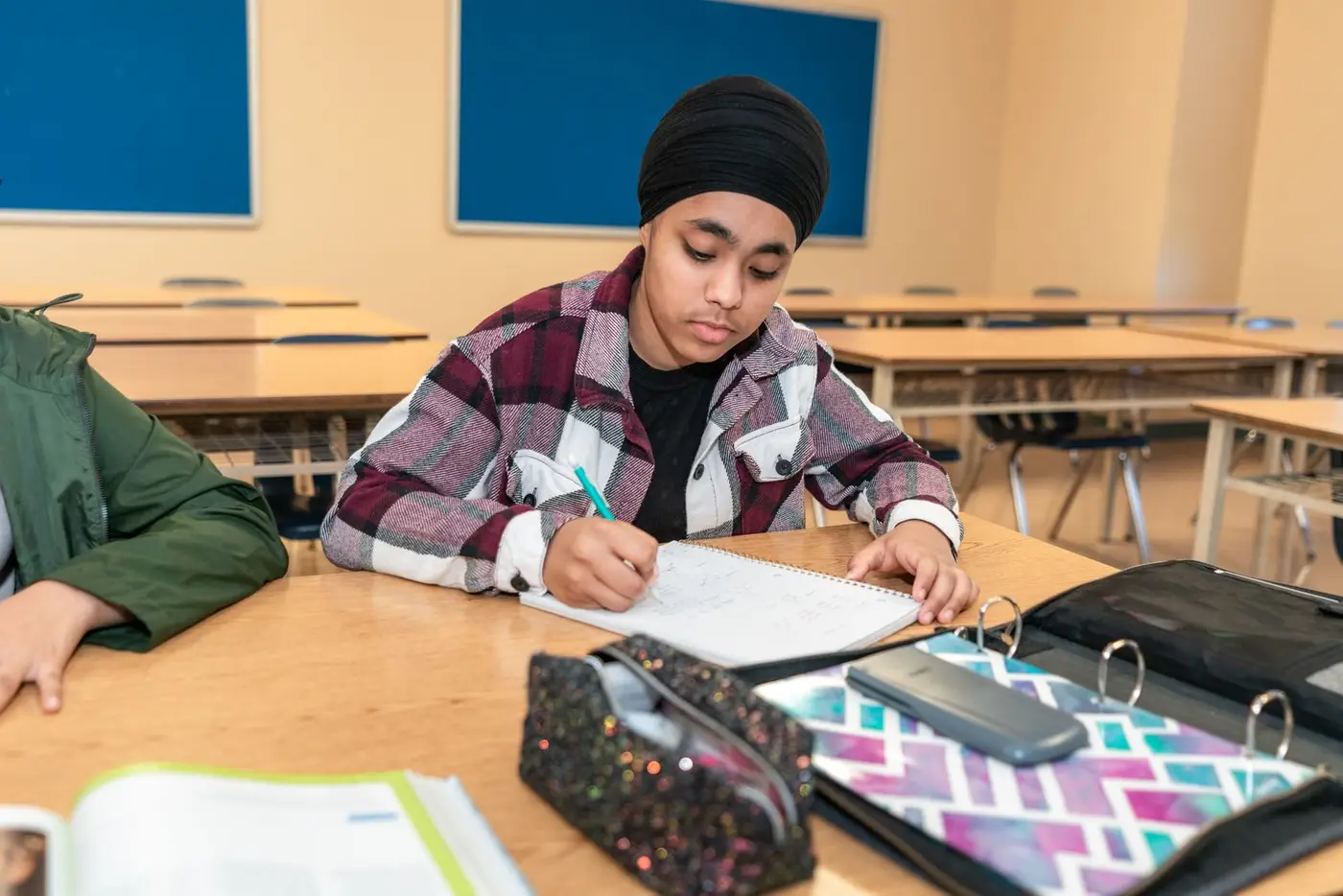
A teenage student writing a solution at a classroom desk

4.8 out of 5326 reviews

Full Guide

What is

Class 12 physics tuition

Class 12 physics is the last school year of the subject, and it is mostly electricity, magnetism, light and the physics of the early twentieth century. CBSE sets it as Physics (042): nine units, fourteen chapters, a theory paper of 70 marks over three hours, and a practical worth 30. CISCE sets the same ground as Physics (861) with a 70-mark theory paper, a 15-mark practical, a 10-mark project and a 5-mark practical file. Tuition here means one tutor sitting with one learner through those chapters, the derivations they rest on, the numericals the board asks for, and the practical file that quietly carries a third of the total.

Key Points

  1. Nine units and fourteen chapters, from electric charges and fields to the semiconductor diode.
  2. Theory is 70 marks in three hours, and the practical examination carries the other 30.
  3. The CBSE 2026-27 paper has 33 questions, all compulsory, with internal choice in six of them.
  4. Calculators are not allowed, so the arithmetic in the last two lines has to be clean.
  5. ISC keeps semiconductor topics that CBSE has trimmed, including the Zener diode and the solar cell.
Format Options

Two ways a physics lesson can run

Some learners want the tutor at the study table with a notebook and a ruler. Others take the same tutor on a screen because the evening is short and coaching runs late. Both work for this subject.

  1. Duration: Usually 60 to 90 minutes, fixed with the tutor

    Physics at the learner's home

    The tutor comes to the house, and a derivation gets built on paper while the learner watches each line appear. Ray diagrams, circuit diagrams and phasor sketches are easier to correct when two people are leaning over the same page.

    • Derivations written out line by line
    • The school notebook and the practical file checked together
    • Timing practised on a full 70-mark paper
    • Days arranged around school and coaching hours
  2. Duration: Usually 45 to 90 minutes, fixed with the tutor

    Online physics tuition

    Lessons run on a video call with a shared board, which suits a subject that lives on diagrams and algebra. A doubt from the school notebook can be photographed between classes and picked up at the start of the next one.

    • A shared board for circuits and ray diagrams
    • The working saved as an image after each class
    • Reaches a tutor living in another city
    • No travel time on either side
Program Levels

Three ways learners arrive at Class 12 physics

A tutor starts from where the learner actually is, and in this subject that is usually one of three places.

Class 11 ideas that Class 12 quietly assumes

Rebuilding the base

Alternating current leans on simple harmonic motion, wave optics leans on wave motion, and every circuit question leans on algebra done at speed. When those were shaky in Class 11, the new chapters feel impossible for reasons that have nothing to do with the new chapters.

Subjects:

Simple harmonic motionWave motionVectorsUnits, errors and significant figures

Focus Areas:

  • Redo the Class 11 topics that feed directly into Class 12
  • Algebra quick enough to survive a three-hour paper
Chapter by chapter, from July to the pre-board

Keeping pace with school

The tutor follows the school's chapter order and stays a little ahead of it, so the lesson in class works as revision. Problem sets follow whatever the school is teaching that week, and the pre-board arrives as a rehearsal.

Subjects:

All nine CBSE unitsPre-board and board papers

Focus Areas:

  • Stay one chapter ahead of the school
  • Weekly numericals on the current chapter
  • One full paper under the clock every month
One set of chapters, two question styles

Board and entrance together

The chapter lists overlap almost completely, and the questions behave differently. A board answer wants the statement, the derivation and the labelled diagram. A JEE Main or NEET question wants the same physics compressed into one number in under a minute.

Subjects:

ElectrostaticsCurrent electricityOpticsModern physics

Focus Areas:

  • Board derivations written out in full
  • The same result reached the short way for an entrance paper
  • Topics the entrance syllabus keeps and CBSE has trimmed
Program Syllabus

What a tutor covers in Class 12 physics

Seven blocks of work that together carry the fourteen chapters and the practical record the board asks for.

Follows the CBSE Physics (042) syllabus for the 2026-27 session. ISC and state board learners meet the same chapters in their own board's order.

Module 01

Electrostatics

Coulomb's law and superposition, the field and potential of a point charge and a dipole, Gauss's theorem and the three standard surfaces it is applied to, then capacitors in series and parallel and the energy a charged capacitor holds.

Topics Covered

  • Coulomb's law and continuous charge distribution
  • Electric field lines and the dipole in a uniform field
  • Gauss's theorem: long wire, infinite sheet, spherical shell
  • Potential, equipotential surfaces and potential energy
  • Capacitance with and without a dielectric
  • Energy stored in a capacitor
Who It Is For

Who takes Class 12 physics tuition

This subject gathers a mixed room: school students on three different boards, entrance aspirants, and people coming back for a second attempt.

Class 12 student on the board syllabus

Studying physics at school on CBSE, ISC or a state board, wanting a clean 70-mark paper and a practical file that is actually finished. The tutor follows the school's chapter order and writes for the marking scheme that board uses.

Recommended:

Start from the chapter school is onTwo full papers a month from DecemberPractical file kept current

Board plus JEE Main or NEET

Class 12 physics and entrance physics share their chapters, and one evening has to serve both. A tutor keeps the board derivations intact while drilling the same ideas in the form an entrance paper asks for.

Recommended:

One chapter, both question stylesTopics the entrance syllabus keepsTimed sets on the heavy units

Repeating the year or improving marks

A dropper, a compartment candidate, or someone sitting the improvement examination. The chapters are familiar and the gaps are specific, so the first job is finding which of the nine units is costing the marks.

Recommended:

A diagnostic paper before anything elseUnit by unit repairRebuild the practical record

Marks slipping before the pre-board

Physics marks often slide between the half-yearly and the pre-board, and a school report says little about why. A first lesson with a single derivation worked through out loud shows the learner exactly which step gives way, something a mark sheet never shows.

Recommended:

Bring one derivation to lesson oneAsk which unit is weakest
Marks map

Where the 70 marks actually sit

CBSE publishes the weight of each block of units along with the syllabus, and a revision plan that ignores it spends the best weeks in the wrong chapters.

70 marks, 3 hours

Theory paper

30 marks, 3 hours

Practical

33, all compulsory

Questions

Not allowed

Calculator

Electrostatics and current electricity

ELEC

Units I and II together. Charges, fields, potential and capacitors, and then everything that happens once the charge starts moving: resistance, cells, Kirchhoff's rules and the bridge circuits built on them.

Core Topics

  • โ€ขGauss's theorem
  • โ€ขCapacitors in series and parallel
  • โ€ขDrift velocity and Ohm's law
  • โ€ขemf and terminal potential difference
  • โ€ขWheatstone bridge

Common Sticking Points

Gauss's theorem looks like one formula and behaves like three, because the surface you choose changes the whole calculation. Circuit questions then punish sign errors the learner cannot see on the page.

Marks in the CBSE paper

16 marks

Weights are from the CBSE Physics (042) syllabus for 2026-27. CISCE groups the same units a little differently for the 2027 ISC examination: electrostatics with current electricity at 14 marks, magnetism with induction and alternating current at 16, electromagnetic waves at 2, optics at 18, dual nature at 7, atoms and nuclei at 6, electronic devices at 7.

A Peek at the Material

A worked minute from a ray optics lesson

This is the kind of short drill a tutor sets before a learner is allowed anywhere near a full numerical.

Ray optics: signs before arithmetic

Fix these four first

uvfRm
Origin at the poleOrigin at the optical centre
Measured with the light: positiveAgainst the light: negative

Put the parts together

  1. 1/v1/u1/v - 1/u = 1/f for a thin lens
  2. vum = v/u, and its sign says erect or inverted
  3. 1/f11/f21/F for two thin lenses in contact

Now use it

A convex lens of focal length 20 cm has an object standing 30 cm in front of it.

Question: Where does the image form, and what does the magnification tell you?

Answer: With u = -30 cm and f = +20 cm, the lens formula gives v = +60 cm, so the image sits 60 cm beyond the lens and is real. The magnification is v/u = -2, so the image is inverted and twice the size of the object.

Written for this page. Nothing here is lifted from a textbook or a past paper.

Where marks leak

Five places Class 12 physics goes wrong

These are the failures that show up again and again in this subject, and none of them is about how clever the learner is.

Challenge

Gauss's theorem is memorised as a formula and then aimed at the wrong surface

A common sticking point

Root cause

The statement is short, and the three applications in the syllabus, the long straight wire, the infinite plane sheet and the thin spherical shell, look like three separate results to be remembered. When a question shifts the geometry slightly, memory has nothing left to offer, because choosing the surface was never the thing being learnt.

What helps

The tutor makes the learner draw the surface first and say out loud why the field stays constant over it. Once the reason behind the cylinder and the pillbox is clear, the algebra takes one line, and an unfamiliar geometry stops being frightening.

Challenge

A circuit answer comes out negative and the learner erases it

A common sticking point

Root cause

Kirchhoff's loop rule needs a direction chosen before any equation is written, and the sign that comes back is information about that choice. Learners read a negative current as a mistake, rub it out, and start guessing directions until the number looks tidy.

What helps

The tutor insists the loop direction is marked on the diagram before an equation appears, then reads the negative sign aloud as a sentence about which way the current really flows. emf and terminal potential difference get separated in the same sitting.

Challenge

The Cartesian sign convention is applied after the arithmetic

A common sticking point

Root cause

Ray optics is taught with formulae that serve mirrors and lenses alike, so learners reach for the formula first and worry about signs when the answer looks strange. In a three-hour paper there is no spare minute to notice that a focal length should have carried a minus.

What helps

Every ray optics answer begins with a diagram, an origin at the pole or the optical centre, and u, v and f written with their signs before the formula is touched. A week of ten-second sign drills removes most of this loss.

Challenge

Alternating current is attempted without the oscillations behind it

A common sticking point

Root cause

Phasors, reactance and resonance assume comfort with sine functions, phase difference and the idea of one quantity leading another. That comfort was built in Class 11, and a learner who was shaky there meets it again inside a chapter that is also carrying new vocabulary.

What helps

The tutor spends a session on simple harmonic motion first, drawing the phasor as a rotating arrow before any LCR circuit is put on the page. Resonance, power factor and wattless current then follow from one picture.

Challenge

Modern physics is read like a story and then tested as a graph

A common sticking point

Root cause

Photoelectric effect, the Bohr model and binding energy are narrative chapters, and reading them feels like understanding them. The board asks for the stopping potential against frequency line, the energy level diagram and the binding energy per nucleon curve, all of which need to have been drawn by hand before.

What helps

The learner draws each standard graph from memory at the start of every revision session, labels both axes and states what the slope and the intercept mean. Numericals in electron volts are repeated until the unit conversion stops being a stumble.

Every one of these appears in a pre-board answer script before it appears in the board paper, which is why a pre-board is worth reading line by line, with the total read last.

How we look for the right tutor

How physics tuition with Edutara works

Edutara matches one learner with one tutor, and everything written below is true of that arrangement as it stands today.

  1. You name the board and the class

    The learner, or whoever registers them, says Class 12 physics, names the board, says CBSE or ISC or which state board, and says whether lessons should be at home or online. Edutara then looks for a tutor who teaches exactly that.

  2. Can you follow this tutor's derivations?

    Physics tuition turns on whether the learner can follow this particular person explaining a derivation. Whenever a learner cannot follow, in the first lesson or months into the course, Edutara replaces the tutor at no cost.

  3. A fee Edutara sets and bills

    Edutara sets the fee for Class 12 physics from the board, the city and home or online lessons, tells you the amount at enrolment, and pays the tutor for every lesson.

  4. Tutors pay nothing to teach here

    No joining fee and no charge for being given a learner to contact. A physics graduate who wants to teach applies free, and Edutara pays for every lesson taught at the rate on the class offer.

  5. At the study table or on a screen

    The same tutor can work beside the learner or over a video call with a shared board, so a learner in any town chooses from physics tutors across India.

What Edutara looks for in a Class 12 physics tutor

Physics at this level asks for somebody who can build a result on paper and also explain why anyone went to the trouble of building it.

What we look for in a tutor
  • A degree in physics or engineering, with the Class 12 derivations fresh enough to write without opening a book
  • Working knowledge of the board the learner actually sits: CBSE, ISC or a state board, each with its own paper habits
  • Comfort with the practical side: the experiments, the activities, the investigatory project and the viva that follows
  • Patience with arithmetic, since the board allows no calculator and marks disappear in the last two lines
  • Section 28 of the RTE Act, 2009 bars serving school teachers, so tutors come from colleges, campuses and the retired teaching bench

How a tutor teaches this subject

Derive it once, then use it twice

A result is built with the learner writing every line, and then put straight to work in two or three numericals. The board asks for both, and keeping them apart leaves a learner able to recite a proof and unable to use it.

Past papers read with the marking scheme open

Marks in physics are given for the statement, the diagram, the formula and the substitution, in that order. Working through recent board papers with the scheme beside them teaches a learner to write for the marks that actually exist.

The practical file kept alive all year

Experiments are recorded in the week they are performed, graphs are plotted properly, and the investigatory project is chosen early. Those 30 marks are the easiest in the subject to keep and the easiest to lose in a hurry.

What you get

Home tuition, a coaching batch or your own table

Most Class 12 students end up using two of these at once, and it helps to see plainly what each one is able to give.

Edutara
7 / 7 Score
  • The pace follows this learner's weak chapters
  • A doubt is answered the moment it appears
  • Somebody checks the practical file and the graphs
  • Lessons happen in the learner's own home
  • A different tutor at no cost whenever the fit is wrong
  • The board's marking scheme worked through with a teacher
  • Fees settled directly with the person teaching
Coaching batch2/7
  • The pace follows this learner's weak chapters
  • A doubt is answered the moment it appears
  • Somebody checks the practical file and the graphs
  • Lessons happen in the learner's own home
  • A different tutor at no cost whenever the fit is wrong
  • The board's marking scheme worked through with a teacher
  • Fees settled directly with the person teaching
Studying alone2/7
  • The pace follows this learner's weak chapters
  • A doubt is answered the moment it appears
  • Somebody checks the practical file and the graphs
  • Lessons happen in the learner's own home
  • A different tutor at no cost whenever the fit is wrong
  • The board's marking scheme worked through with a teacher
  • Fees settled directly with the person teaching
At home or online

At the study table or on a screen

  1. Online tuition

    Anywhere in India with a steady connection

    Online lessons suit Class 12 physics, because the work is diagrams and algebra that both people can watch appear on a shared board. Evening slots after school and coaching are the usual pattern.

    Shared board for circuits and ray diagrams
    Doubts sent across between classes
    Useful where a physics tutor is hard to find nearby

    Timezone: IST (UTC+5:30)

  2. Home tuition

    In the learner's own home

    For lessons at home, Edutara looks for a tutor able to travel to the learner's address at a time that fits school and coaching hours. Name the locality when you ask, since travel time decides what is workable on a weekday.

    Available cities:

FAQ

What learners ask before Class 12 physics tuition

The ones that come up before anybody talks about starting lessons.

How is Class 12 physics marked, between theory and practical?
CBSE sets Physics (042) as a theory paper of 70 marks over three hours and a practical of 30 marks. Inside the practical, two experiments carry 7 marks each, the practical record carries 5, one activity carries 3, the investigatory project carries 3, and the viva carries 5. CISCE splits its 100 differently for the 2027 ISC examination: a 70-mark theory paper, a 15-mark practical, project work worth 10 and a practical file worth 5. State boards publish their own split, so take that one from your board's syllabus for the current year.
Is the ISC physics syllabus the same as CBSE?
The chapter lists run close together, and the weights differ. For the 2027 ISC examination, optics carries 18 marks, magnetism with induction and alternating current carries 16, electrostatics with current electricity carries 14, and electromagnetic waves carries 2. ISC also keeps semiconductor topics CBSE has trimmed for 2026-27, including the LED, the photodiode, the solar cell and the Zener diode. A tutor who has taught both boards can tell you where your book goes further than your friend's, which matters most in the last unit.
Which Class 12 physics chapters lose the most marks?
The usual losses cluster in four places, and all four are habits of writing that a few weeks can change. Gauss's theorem, where the wrong surface is chosen. Circuit problems, where a negative sign is rubbed out when it was telling you the current's direction. Ray optics, where the Cartesian sign convention arrives after the arithmetic. And alternating current, where phasors are attempted without the simple harmonic motion they stand on. Modern physics loses marks in a different way: the chapters read easily and are then examined through graphs that the learner has never drawn by hand.
Can a school teacher come home for physics tuition?
No, and the bar sits in law. Section 28 of the Right of Children to Free and Compulsory Education Act, 2009 stops a teacher employed in a school from giving private tuition. So the physics tutors Edutara looks for are college students and graduates, postgraduates, people working in engineering or research, and retired teachers, all of whom are free of that restriction. For Class 12 physics that often works in the learner's favour, because somebody who finished the same derivations recently still remembers which line of them is the hard one.
We are on UP Board, Bihar Board or another state board. Will a tutor know that syllabus?
Name the board when you ask, and it goes into the search. Most state boards build Class 12 physics on the same NCERT chapters, so the physics itself carries across. The paper is where boards part: the split between theory and practical, the share of objective questions, and the language the paper is set in. Get the current year's syllabus and paper pattern from your board's own site, and hand it to the tutor in the first week so the practice papers match what you will sit.
What does the CBSE Class 12 physics paper look like in 2026-27?
The sample paper CBSE published for the 2026-27 session carries 33 questions, all compulsory, in five sections. Section A has sixteen one-mark questions, twelve multiple choice and four assertion-reasoning. Section B has five questions of two marks, Section C has seven of three marks, Section D has two case study questions of four marks, and Section E has three long answers of five marks. There is no overall choice in the paper, and internal choice appears in six questions: two in Section B, one in Section C and all three in Section E. Calculators are not allowed.
Can the same tutor handle the board syllabus and JEE Main or NEET physics?
The chapter list overlaps almost completely. The NEET (UG) 2026 syllabus published by the National Medical Commission lists Electrostatics, Current Electricity, Magnetic Effects of Current and Magnetism, Electromagnetic Induction and Alternating Currents, Electromagnetic Waves, Optics, Dual Nature of Matter and Radiation, Atoms and Nuclei and Electronic Devices, which is the Class 12 course, and adds a unit on experimental skills. What changes is the question. A board answer is written out with the derivation and a labelled diagram, and earns marks along the way. An entrance question wants one number quickly and pays nothing for the working. Many learners keep one tutor for the physics and work each chapter twice, once in each style.
Physics tuition ki fees kitni hai?
Edutara names the fee for Class 12 physics at enrolment, and you pay it to Edutara on one invoice; Edutara pays the tutor. The figure follows the class and the board, whether the syllabus is CBSE or a state board, and whether lessons run at your home or online. In the first lesson you hear the tutor work through one derivation, and a change of tutor costs nothing at any stage of the year.
Does online physics tuition work when the subject is all diagrams?
It works when the tutor uses a shared board and writes on it, the same way they would write on paper. Ray diagrams, circuit diagrams, phasor diagrams and graphs all draw cleanly on a tablet, and the learner can photograph a doubt from their own notebook and send it before the class begins. Two things decide it: a steady connection, and a tutor who writes on screen while explaining. Check both in the first lesson.
When should Class 12 physics tuition start?
Earlier than most learners begin it. The Directorate of Education in Delhi asks its schools to finish the Class 12 physics course by 5 December 2026, and CBSE schools generally work to a deadline around there so the pre-board has something to test. That leaves December to February for revision and full papers. A learner who starts tuition in July or August meets every chapter twice, once at school and once at home. A learner who starts in December is revising chapters that were never really learnt.
Complete Guide

A closer look at the Class 12 physics year

  1. What the 70-mark paper is really testing

    CBSE publishes a question paper design alongside the syllabus, and it says plainly what kind of thinking those 70 marks are buying. In the 2026-27 design, 27 marks go to remembering and understanding, 22 marks go to applying knowledge in a situation the learner has not seen before, and 21 marks go to analysing, evaluating and creating. Read that as a warning against a revision plan built on rereading the textbook, because roughly half the paper asks the learner to do something with the physics in a setting nobody has rehearsed.

    The marks also sit unevenly across the nine units. Optics with electromagnetic waves carries 18, magnetism with induction and alternating current carries 17, electrostatics with current electricity carries 16, dual nature with atoms and nuclei carries 12, and semiconductor electronics carries 7. Three blocks therefore hold 51 of the 70 marks, and not one of them is a chapter anybody finishes in a week.

    Practical Tips

    1. Draw every standard graph from memory once a week: stopping potential against frequency, binding energy per nucleon, the diode I-V curve.
    2. Write one full three-hour paper a month from December onwards, with no calculator anywhere on the table.
    3. Keep a single sheet listing the derivations the board has asked for in the last five years, and revise from that sheet.
    4. Practise the Section D case study questions separately, since four marks arrive wrapped in a passage and most learners rush the reading.
  2. The 30 marks most students forget about until February

    CBSE asks for a record of at least eight experiments with four from each of the two sections, at least six activities with three from each section, and the report of one investigatory project. The practical examination itself runs three hours for 30 marks: two experiments at 7 marks each, the practical record at 5, one activity at 3, the project at 3, and the viva at 5.

    Those 30 marks are the most predictable in the whole subject, and they are also the ones most likely to be assembled in a panic. Section A of the experiment list is electrical: resistivity from a potential difference against current graph, the metre bridge, the half deflection method for a galvanometer, and converting a galvanometer into an ammeter or a voltmeter. Section B is largely optics, from the focal length of a concave mirror to the angle of minimum deviation for a prism, ending with the I-V curve of a p-n junction diode. A tutor who sits with the file through the year turns a February scramble into marks banked before the theory paper even begins.

    Mistakes & Solutions

    The practical file is copied from a friend in February
    Record every experiment in the week it is performed, with your own readings, your own graph and your own note on sources of error, because the viva asks about exactly those.
    The investigatory project is chosen in January
    Pick the project by October. It needs a question, a set of readings and a written report, and the examiner's questions will run across all three.
    Graphs are drawn without a stated scale or labelled axes
    Give every graph titled axes, a stated scale and points marked as points, since an examiner reads the graph before reading your conclusion.
  3. Where board physics and entrance physics part company

    The chapters are the same, and that is exactly what misleads people. The NEET (UG) 2026 syllabus, issued by the National Medical Commission in December 2025, runs from Electrostatics through to Electronic Devices in the same order Class 12 does, and then adds a unit on experimental skills.

    The parting happens at the edges of the syllabus and in the shape of the answer. The CBSE Class 12 syllabus for 2026-27 ends its electronics unit at the semiconductor diode working as a rectifier. The NEET syllabus for the same year keeps the LED, the photodiode, the solar cell, the Zener diode as a voltage regulator, and logic gates. ISC keeps several of those too. A learner preparing for an entrance exam from the school textbook alone will simply never meet them.

    The answer itself differs just as much. The board wants the statement, the derivation, the labelled diagram and the substitution, written in order, and gives marks along the way. An entrance paper wants a number and gives nothing for the working. Both habits can be built in the same year, on the same chapter, in the same week, and they are built separately.

    Mistakes & Solutions

    Board derivations get dropped because the entrance paper never asks for them
    Keep one derivation-writing session every week through the year, since Section E of the board paper carries three five-mark questions that live entirely on them.
    Entrance shortcuts are carried into the board answer script
    Write the board answer the long way. The marking scheme pays for the statement and the diagram as well as the final number, and a bare answer collects a fraction of the marks.
  4. Home tuition, a coaching batch or your own table

    Private tuitionAgreed with the tutor
    The pace follows the chapters this learner is weak in
    A doubt is answered in the minute it appears
    The practical file and its graphs get checked by somebody
    Travel time limits how many weekday slots a tutor can offer
    Coaching centreSet by the centre
    A fixed schedule that is hard to postpone
    Regular tests measured against a large group
    The batch moves at its own pace through the chapters
    A doubt usually waits until the class has ended
    Online tuitionAgreed with the tutor
    Reaches a tutor who lives in another city
    No travel time on either side of the lesson
    A shared board keeps the working visible to both
    Needs a steady connection and one quiet hour

    Most Class 12 students use two of these at once, and the real question is which one carries the physics. A subject that loses its marks to habits of writing tends to need somebody watching the writing.

Getting started

Start with one chapter and one derivation

  • Tutor changed free at any stage
  • One Edutara invoice
  • At home or online
  • CBSE, ISC and state boards

Tell Edutara the board, the class and whether you want the tutor at home or online, and the search for a physics tutor starts from there.

Find a physics tutor

You keep a tutor only while it works, and a new one is free anytime.

Find a physics tutor